
By Our Staff Writer
In an interesting move, Thailand announced plans to use ‘food innovation’ as a new growth engine for the country’s wellness economy. The latest initiative is part of a multi-prong strategy, involving AI, ICT and software, besides food innovation, to push the country into a global wellness tourism hub.
As part of its strategy to deploy food innovation to promote wellness economy, Thailand announced the launch of “SPACE-F Year 7”, its global foodtech startup incubator and accelerator programme. The incubator programme is aimed at continuing the success of solving food industry challenges through sustainable innovation.
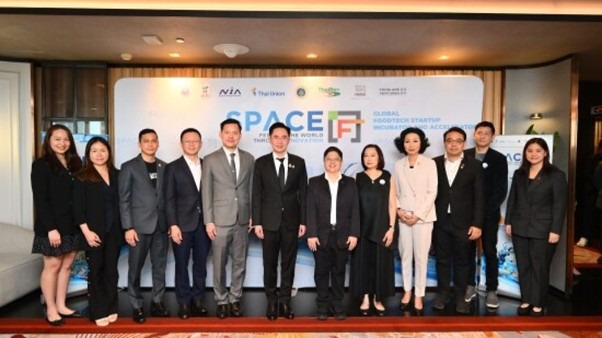
The “SPACE-F Year 7”, launched as a public-private initiative involving a clutch of organizations and corporate entities, is also expected to be a vehicle to connect investment opportunities.
Prof. Dr. Yodchanan Wongsawat, Thailand’s Deputy Prime Minister and Minister of Higher Education, Science, Research and Innovation (MHESI), the food startups under the incubator programme will be encouraged to utilize the country’s rich biodiversity and GI products as substitutes for imported raw materials. “This will help reduce costs and create a unique identity,” he said.
“As for connecting the ‘Thinker’ with the ‘Doer,’ the programme emphasizes linking startups with large industrial corporations and investors. This helps startups in the accelerator group advance toward Series A or B funding, while helping the incubator group learn business and pitching experiences from their seniors,” he said.
The SPACE-F Year 7 programme marks another major milestone of leapfrog growth, setting a new international record with an all-time high of 204 applicants, continuously increasing from 156 in Cohort 6 and 148 in Cohort 2, reflecting the confidence of global startups in the programme’s potential.
The program has also significantly expanded its international reach over the years, with applicants from 57 countries worldwide, up from 34 countries in the previous cohort.