By Our Staff Writer
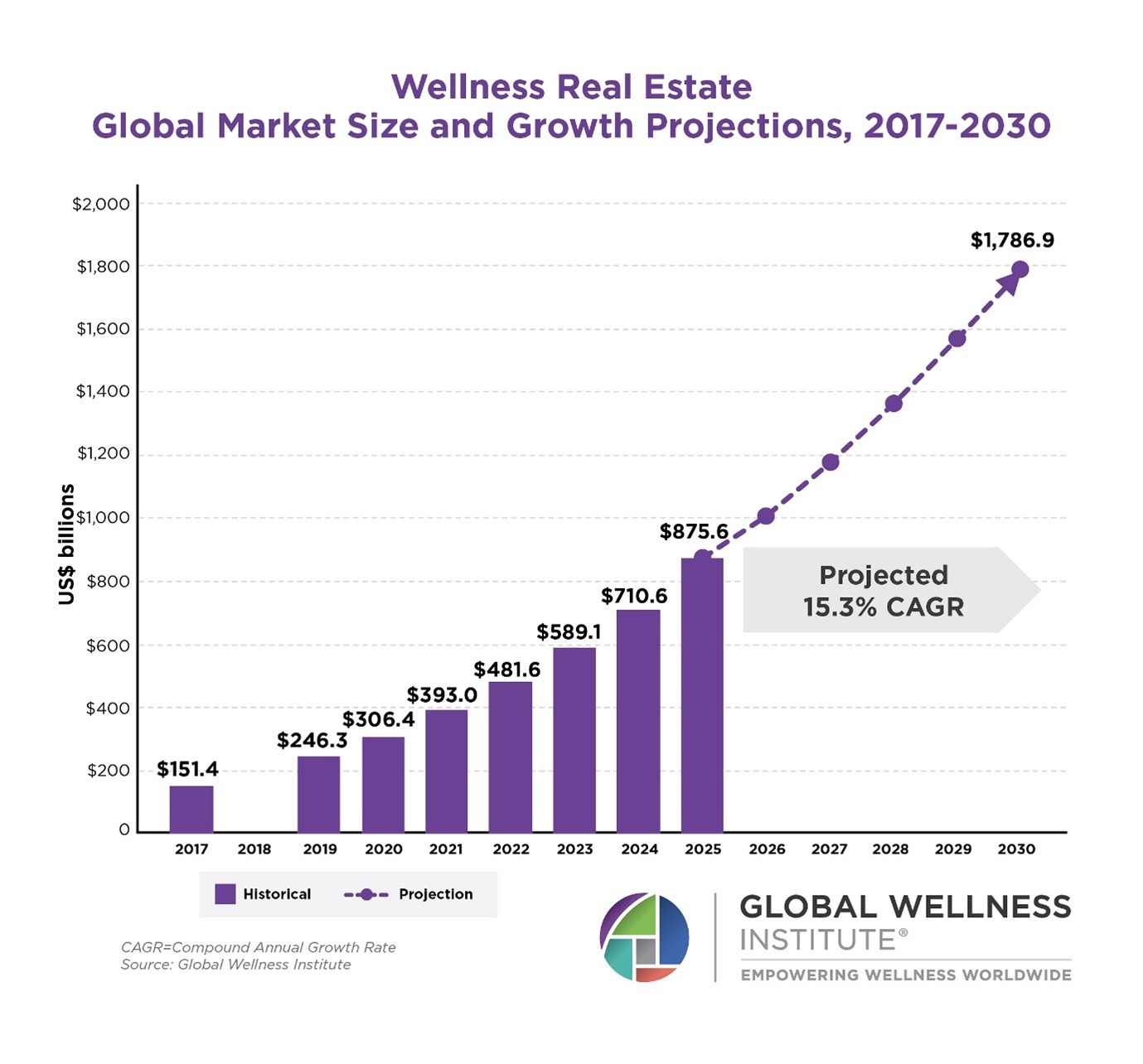
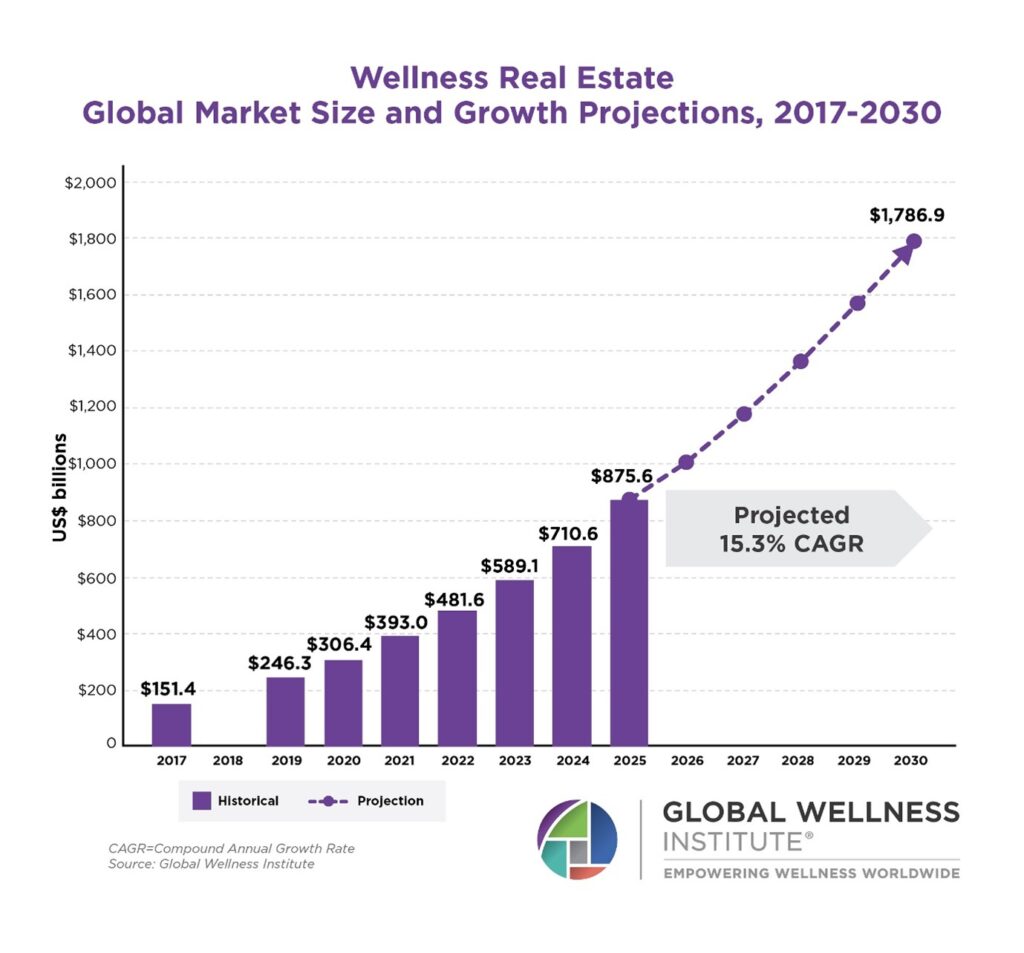
Latest data unveiled on the global wellness real estate market projected the market to hit a massive $1.8 trillion size by 2030. The data, release by the non-profit Global Wellness Institute (GWI) on May 12, showed that the market reached $876 billion in 2025 from $151 billion in 2017.
GWI defines wellness real estate as “built environments proactively designed, built and operated to support the holistic health of occupants, visitors and the community”.
The US, with $254 billion, is the largest national market, followed by China ($218bn) and the UK ($51bn) occupying the second and third slots. Italy, Spain and Saudi Arabia saw the biggest annual growth gains from 2019 to 2025, at 50 percent, 46 percent and 34 percent, respectively, GWI, the leading research organization for the global wellness industry, said.
The numbers released on Tuesday are a data preview of the full update on the market in the 2026 Wellness Economy Monitor to be released this November at the Global WellnessSummit in Phuket, Thailand.
The data showed that Asia-Pacific is the largest regional market ($350bn), followed by North America ($274bn) and Europe ($205bn). Together, these regions make up over 95 percent of the market.
Every region has seen strong growth from 2019 to 2025, with the largest percentage gains in Latin America-Caribbean and Middle East-North Africa, the report said.
The GWI also unveiled Build Well to Live Well: Case Studies, Volume 2, an in-depth look at pioneering projects in Saudi Arabia and the United Arab Emirates, two countries seeing incredible wellness real estate growth.
According to the report, presented today at the Global Wellness Summit’s Wellness RealEstate & Communities Symposium in New York City, Saudi Arabia’s market grew 85 percent annually from 2017 to 2025 -the highest rate in the world, while the UAE’s market experienced 21 percent growth per year over the same period.
The case studies reveal a unique market, defined by audacious, large-scale projects, along with powerful commitments to sustainability, community wellbeing and local heritage.