
By James Mathew
Call it a momentous de-stressing movement or a silent digital-detoxing drive, if you want. 2026 is rapidly emerging as a year of ‘family wellness’ trips, prioritizing collective mental health, physical vitality, and intentional digital disconnection.
Travel plans are fast shifting away from traditional, high-stress sightseeing vacations, with families – involving multi-generations – are now choosing holiday breaks that offer peace, healing, healthy living, and unforgettable wellness experiences together, sector experts and market studies showed.

Surge in family wellness trips Photo courtesy: Filip Rankovic Grobgaard/Unsplash
Industry players are betting on a major uptick in the trend going forward, quickly devising new packages, offering a wide range of ‘healing’ destinations and rejuvenation activities for everyone – grandparents, parents, children to grandchildren.
“As people become more health-conscious in 2026, family-oriented wellness tourism is expected to become one of the most popular sectors in global travel,” a senior executive with a Bangkok-based global wellness operator, said. “Family wellness tourism is increasingly becoming a modern travel lifestyle that promotes health, relaxation, and stronger family relationships,” she added.
Senior executives working with firms operating in the wellness and hospitality segments in Dubai, Kerala and Portugal said family wellness trips are emerging as a dominant trend of late because they address a critical double-crisis – parental burnout and youth digital dependency.

Family wellness trips more than a passing fad Photo courtesy: Osman Icli/Unsplash
Rather than a passing fad, this shift represents a structural realignment of how families vacation, they said, adding that families are moving away from hyper-scheduled, stress-inducing sightseeing trips and, instead, choosing vacations designed for collective nervous system regulation.
Industry insiders said the underlying catalysts driving this trend currently, along with projections of a strong long-term momentum, paint a clear picture of the market’s future.
Why the sudden boom in family wellness trips
Sector experts point out the sudden convergence of several modern societal pressures as the major reason fuelling the rapid rise of family wellness trips.
It is a fairly well-known fact that parents are facing unprecedented levels of daily friction, balancing remote or hybrid careers, household logistics, and domestic stress. Recent surveys by some of the psychological associations showed that close to 50 percent of parents reporting unsustainable daily stress levels.

Tech fatigue is a serious issue among children Photo courtesy: Emily Wade/Unsplash
Concurrently, children are dealing with intense academic anxiety and tech fatigue, on the back of digital saturation reaching a boiling point. This is reportedly forcing parents to actively treat vacations as a health intervention, paying premium rates for ‘forced’ digital detox environments where screen removal is managed by experts through immersive nature-based play.
The double-burnout dynamic – parents’ own surging daily stress levels, coupled with the tech-fatigue of their children – is said to the primary reason for modern parents to prioritize longevity and preventative health for their entire family. Experts said parents are also increasingly realising the need for their children to learn emotional resilience, mindful breathing, and healthy nutritional habits early in life.
After pursuing a heavily individualized life-style for a long time, families are now seen turning to wellness travel specifically to rediscover shared spaces. They now choose group sound baths, wilderness survival courses, and synchronized fitness among the wellness means to reconnect family bonding, sector experts said.
Children are seen game for family wellness vacation
Significantly, market studies showed that children – especially Gen Alpha and younger Gen Z – are increasingly and positively open to family wellness trips in 2026, pivoting entirely away from their previous indifference. This also marks a major behavioural shift among children, studies revealed.
“Rather than viewing wellness as a boring or clinical restriction, today’s kids actively embrace it because resorts have successfully gamified and socialised the experience,” according to 8th Floor, a prominent London-based hospitality consultancy and hotel representation agency specializing in the global wellness travel sector.

Youngsters are open to family trips Photo courtesy: Francisco Rioseco/Unsplash
According to Family Travel Association (FTA), a leading non-profit trade association, children are exerting unprecedented leverage over family travel choices of late. Citing reports by modern travel agencies, FTA said younger generations are explicitly requesting trips that feature active, health-conscious pursuits – such as cross-country cycling tours, farm-to-table organic dining, and eco-tours – rather than commercial theme parks.
According to data from the Global Wellness Institute (GWI), youth are, of late, actively leaning into screen-free periods, finding comfort in slow hobbies, group walks, and wind-down evening rituals over digital stimulation.
“Modern children are far more vocabulary-equipped to handle stress. They enthusiastically participate in ‘co-regulation modelling’, sensory integration, and breathwork sessions specifically designed to help them share big feelings,” GWI said.
Interestingly, spotting a major growth opportunity, wellness sector players are further stimulating children’s behavioural shifts with gamified wellness programmes, offering high-octane, immersive play activities. Animal flow yoga, beach boot camps, and child-friendly fitness tracks are among a wide variety of activities on offer to woo kids and youngsters.
Resorts are reportedly curating programmes for grandparents, parents, and children to bond rather than separating them, with offerings including custom family yoga, healthy cooking classes, and gentle outdoor exploration.
Regions leading in family wellness travel segment
North America and Western Europe are estimated to hold the largest market share in the rising ‘family wellness’ travel segment as of early 2026, while the Asia-Pacific (APAC) region is seen as the fastest-growing hub globally for this segment, according to Research and Markets, a market research entity.
The driving forces behind these regional leaders stem from unique geographical, infrastructural, and cultural advantages that cater perfectly to family groups.

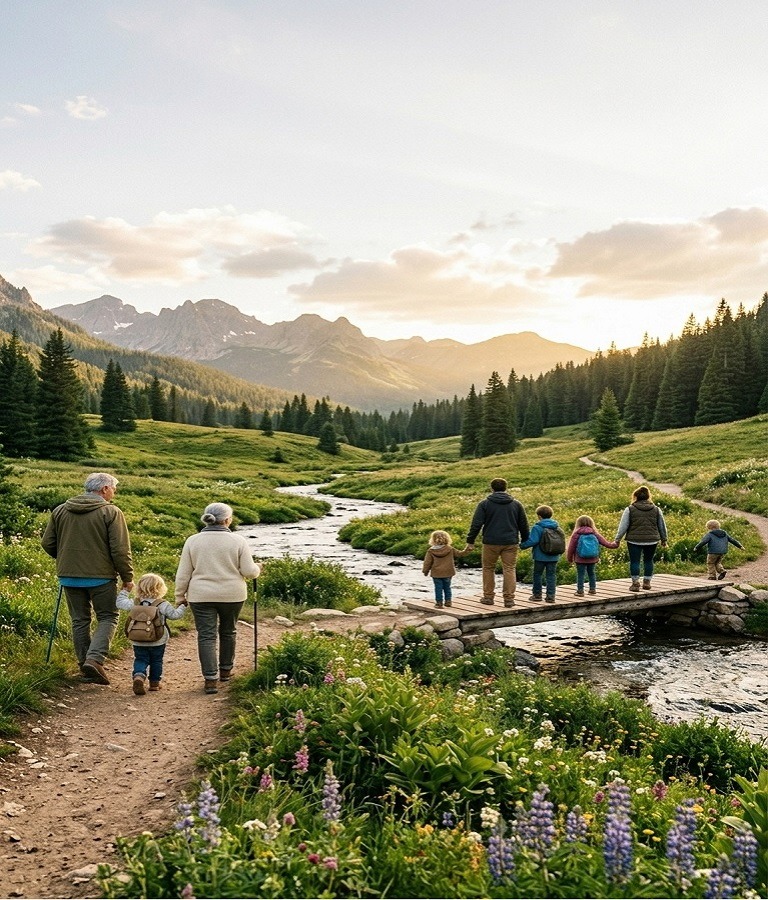
Hiking trips by families on the rise Photo courtesy: Andrew S/Unsplash
North American parents are leading the global demand for family digital detox vacations. Resorts across the US and Canada are cashing in on the rising demand by offering structured, low-friction outdoor programming, replacing iPads and video games with multi-generational hiking, survival skills classes, and outdoor sound-healing circles.
In Western Europe, the thermal baths and alpine healing retreats in countries like Germany, Austria, Switzerland, and Italy are rebranding their properties to feature high-tech and low-fi “brain training” protocols designed for both working parents suffering from corporate burnout and children suffering from academic or digital exhaustion.
Meanwhile, several multigenerational resorts in India, Thailand, Bali (Indonesia), and Malaysia are reportedly leading the charge in adapting physical infrastructure for families to tap the new business opportunity.

Forest bathing in Japan Photo courtesy: Casey Horner/Unsplash
Japan, on the other hand, is seen capturing families through cultural immersion wellness, specifically surrounding ‘onsen’ (hot spring) tourism and forest bathing (shinrin-yoku).
With the boom in ‘family wellness’ trips, sector experts are betting that the days won’t be far when the family and multi-generational wellness travel transforming into a major market driver, capturing 15 percent to 20 percent of the estimated over $1 trillion global wellness tourism market, from a niche trend till recently.