
By James Mathew
Global wellness tourism sector is set to hit a turbo-charged growth trajectory in 2026, propelled by wellness travel initiatives by corporate groups and companies. Both new age and traditional companies are incorporating a slew of measures related to employee wellness in their corporate strategy blueprints, mostly involving group travel and offsite rejuvenation activities – a trend which is predicted to reset the growth dynamics of the wellness and hospitality sectors.
The rising incidence of employees quitting their jobs owing to poor work environment and mental stress, accentuated by the rising AI-induced uncertainties on jobs, is forcing corporate groups and large and medium-scale organizations to increasingly focus on implementing programmes to increase employee wellness and engagement.

Happy employees boost productivity . Photo courtesy: Freepik
This, in turn, is predicted to reshape global wellness travel market, boosting revenues and market size to far higher levels in the current year and beyond, market studies and sector experts said.
Companies around the world are said to be increasingly opting for integrated, long-term health strategies for their employees instead of their earlier practise of one-off perks. These include converting tight-scheduled business trips to ‘bleisure’ – combining business and leisure – trips with families for senior and top executives and company-sponsored group trips to high value wellness retreats in sought-after far-off wellness travel destinations.
The measures, focused on team-building, digital detoxes and mental health and aimed at enhance employee longevity and performance, are slated to be a win-win for both the corporate and the wellness travel sectors – companies gaining big in terms of increased employee productivity, leading to higher profitability, while the wellness tourism sector benefitting by way of getting strong tail winds for growth.
Corporate wellness travel trends
Organizations are increasingly shifting their focus from physical fitness toward a more holistic approach that includes the social as well as mental well-being of their employees. This mainly involves promoting wellness travel to improve employee mental health, engagement, and retention. Latest corporate HR (human resources) strategies include sponsoring wellness-focused retreats, providing subsidies for fitness-oriented trips, offering ‘bleisure’ – business-cum-leisure flexibility in business trips, and using digital platforms for tracking wellness goals during travel.

Group employee sporty activities. Photo courtesy: Freepik
The new corporate HR initiatives also include companies partnering with wellness-focused hotels or destinations, taking offsite meetings, team workshops, and strategy sessions to places designed for recharging. Think massages, adventure activities, healthy meals, meditation, and movement seamlessly blended with traditional business sessions. The retreat-style employee engagement activities are designed to combat burnout, focusing on deep immersion, nervous system regulation, and lasting restoration.
Brain exercises, neuroactive fitness, and mental health programmes are also part of the new corporate wellness strategies, triggering mushrooming of new wellness providers to cater to the corporate demand. Hospitality players are also reconfiguring their offerings to tap this fast-rising business opportunity, industry players said.
Sector experts said the boom in corporate wellness travel is also triggering a surge in ‘social wellness’ activities, where retreats focus on community connection. While these often involve team-based challenges for employees, for corporate executives who are on ‘bleisure’ trips, they include family-friendly wellness programming to support work-life integration.
Industry insiders said of late they are also observing a notable shift towards alcohol-free, nature-based retreats to promote mental clarity and balance. These initiatives are transforming corporate travel into a critical tool for employee wellness, driving a significant portion of the projected 9.6 percent CAGR (compound annual growth rate) in the wellness tourism industry over a five-year period till 2031, according to market studies.
Corporate wellness travel predictions for 2026 and beyond
“Functional” retreats are the new buzzword in corporate wellness travel, with companies increasingly targeting to focus on measurable outcomes such as burnout recovery, stress resilience, and cognitive performance from their employee wellness initiatives.
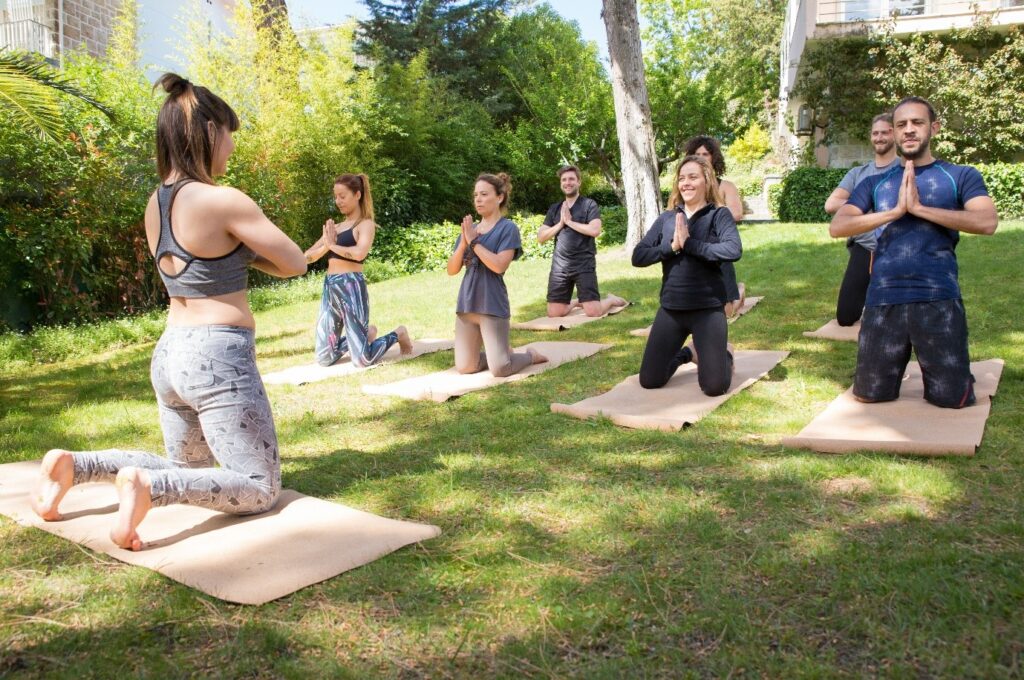
Functional retreats are in vogue Photo courtesy: Katemangostar/Freepik
Advancing on their employee wellness strategies, some of the corporate groups are also said to be replacing generic group trips by itineraries tailored to an individual’s biology and lifestyle. This includes using biometric screenings and genetic testing prior to arrival to customize nutrition and fitness plans for employees.
Of late, many companies are also opting for a strict ‘no devise’ mode for wellness trips for employees, aimed to restore strategic thinking and team cohesion. Corporate groups are increasingly booking retreats that enforce intentional unplugging from devices, as part of their move to counteract the “always-on” culture of remote and hybrid work. Many companies are also said to encourage the use of wearable devices and wellness apps to enable personalized, data-driven health experiences, ensuring the wellness benefits extend beyond the trip.
Sector experts said corporate wellness is being reframed as preventive healthcare, coining catchy phrases such as “longevity tourism”, offering high-tech treatments like IV nutrient therapy, cryotherapy, and biohacking to maintain employee health and long-term productivity.
Market impact and growth
The surge in corporate wellness travel is expected to give a major growth impetus to the wellness tourism, with the market, estimated at $68.41billion in 2025, is projected to reach a massive $118.21 billion by 2034, according to Fortune Business Insights.
North America is seen to have dominated the global corporate wellness market with over 37 percent market share in 2025, driven by growing employer focus on employee engagement, rising adoption of wellness programmes to reduce absenteeism, and increasing availability of diverse wellness offerings.
Europe is estimated to have accounted for the second-largest market share. Within Europe, Tuscany, Italy, is popular for small, high-level executive teams seeking a ‘slow down’ atmosphere, while Switzerland remains the premier hub for high-end ‘medical wellness’.

Surge in corporate wellness travel predicted Photo courtesy: Chang Doung/Unsplash
The Asia Pacific region is expected to register the highest CAGR during the 2025-2034 period, driven by rising awareness of workplace health issues, increasing chronic disease burden and growing employer investments in wellness programmes. Countries like India, China, Japan, and Southeast Asia show significant market potential due to expanding corporate sectors and government support, according to Fortune Business Insights.
Within Asia, Singapore, Bali in Indonesia, Phuket in Thailand and Kerala and Rishikesh, in India, are emerging as the preferred destinations for corporate wellness travel trips.
While Singapore is preferred for high-stakes leadership offsites and strategic planning, Ubud, Bali (Indonesia) is a preferred choice for “soulful” retreats that foster creativity. Kerala, described as the global epicentre for Ayurveda, and Rishikesh, famous for spiritual and yoga-centric retreats, have several facilities which offer structured corporate wellness programmes focused on burnout recovery and mental health.
Latin America, Middle East and Africa regions are also projected to see high growth propelled by increasing corporate investments to address work-related health problems and launching of tailored wellness programs catering to diverse workforce needs.
As companies continue to prioritize employee health and happiness, with initiatives such as wellness travel for promoting employee well-being in the corporate world, the trend is predicted to provide a major boost to wellness tourism industry globally. With more and more companies likely to join the bandwagon realising the value in leveraging it to promote employee well-being, the growth momentum in the wellness travel sector will see major upsurge going forward.